

How to Choose Childcare Near You: A Parent’s Guide
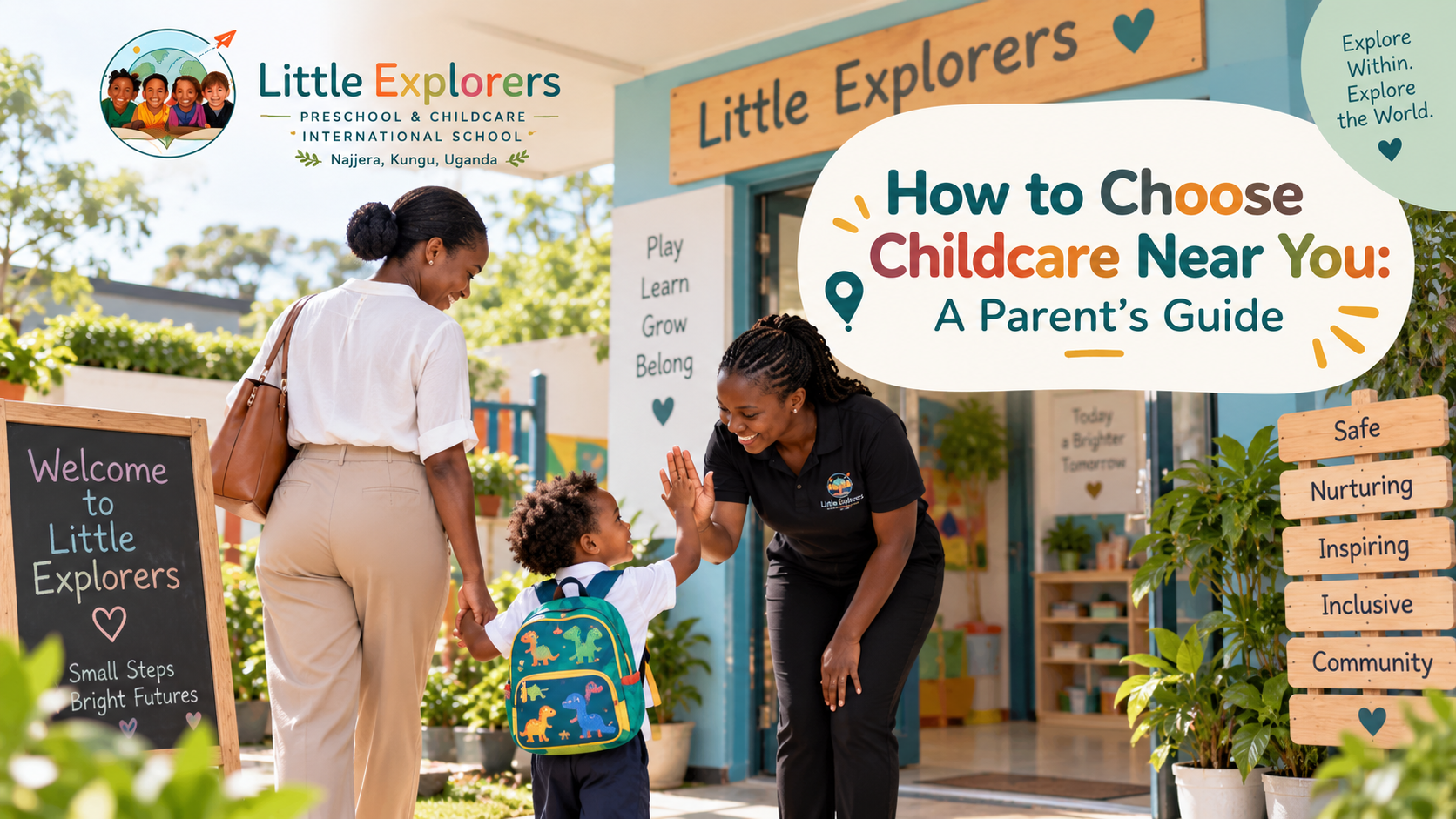
Finding the right childcare is about more than convenience. Learn what parents should look for when comparing childcare options, from safety and nurturing educators to learning environments, communication, and daily routines.
child and your family takes more than choosing the closest centre.
For young children, childcare is a major part of their everyday world. It is where they build relationships, develop independence, explore new ideas and learn how to feel comfortable away from home.
For parents comparing daycare and early years options, here are the most important things to consider before making a decision.
1. Start With Location — But Don’t Stop There
Location matters.
A childcare centre that is reasonably close to your home or daily route can make mornings easier and reduce unnecessary travel for your child.
Parents searching online for “daycare centers near me” or “daycare facilities near me” should therefore start by creating a shortlist of convenient options.
But proximity alone should not determine your decision.
A slightly longer journey may be worthwhile if the environment, educators and approach are a significantly better fit for your child.
2. Visit the Childcare Centre in Person
A website and photographs can help you create a shortlist, but an in-person visit gives you information that is difficult to get online.
When you visit, pay attention to the atmosphere.
Do the children appear comfortable and engaged? Are educators interacting warmly with them? Are the rooms organised and appropriate for young children?
You should also look at how children move through the environment and whether they have opportunities to explore rather than simply being directed from one activity to another.
A private tour can help parents understand what a normal day actually looks like.
3. Ask About Safety and Supervision
Safety should always be one of your first questions.
Ask how children are supervised throughout the day and how the centre manages arrivals, departures and authorised collection.
Parents can also ask about:
Child safeguarding procedures
Hygiene and cleaning routines
First-aid arrangements
Emergency procedures
Outdoor supervision
Visitor access
How accidents or incidents are communicated to families
A professional childcare provider should be comfortable explaining these procedures clearly.
4. Look Beyond Childcare to Learning
High-quality childcare is not simply somewhere children stay while parents are working.
Young children are constantly learning.
Everyday experiences such as building, sorting, drawing, talking, sharing, dressing themselves and exploring outdoors can contribute to their development.
Look for an environment where play and purposeful activities encourage curiosity, communication, problem-solving and independence.
At Little Explorers, our approach places importance on meaningful early experiences that support the development of the whole child.
5. Consider Your Child’s Age and Stage
The needs of an 18-month-old are very different from those of a four- or five-year-old.
Good childcare should recognise these differences.
Younger children may need greater emphasis on secure relationships, predictable routines, movement and sensory exploration.
As children grow, they can gradually take on more independence, communication, collaborative play and increasingly challenging learning experiences.
Rather than asking only, “What activities do you provide?”, ask:
“How does the programme change as my child develops?”
That question can reveal much more about the quality of an early years programme.
6. Observe the Relationship Between Educators and Children
One of the most valuable things to watch during your visit is how adults communicate with children.
Look for educators who get down to children's level, listen to them, encourage questions and respond calmly when children need support.
Children should feel safe enough to explore while knowing that trusted adults are nearby when they need help.
Warm, responsive relationships provide an important foundation for learning during the early years.
7. Ask About Daily Routines
Parents should understand what their child's typical day will involve.
Ask about arrival, meals, learning activities, outdoor play, rest periods and collection.
A useful routine provides enough predictability for children to feel secure while still allowing flexibility for their individual needs.
If your child will spend a large part of the day at the centre, ask how active play, quiet activities and rest are balanced.
8. Check Communication With Parents
Your relationship with the childcare provider matters too.
Parents should know how information about their child is shared.
For example, how will you learn about your child's day? Who should you contact if you have a concern? How are important changes communicated?
Good communication helps families and educators work together rather than operating as two completely separate parts of a child's life.
9. Understand the Full Cost
When comparing childcare providers, don't compare the headline fee alone.
Ask exactly what the fee includes.
Depending on the provider, additional costs could include meals, extended hours, activities, transport, materials or holiday care.
Understanding the complete package makes it much easier to compare childcare options fairly.
10. Think About Flexibility
Family schedules are not always predictable.
Before enrolling, find out what childcare arrangements are available outside standard programme hours.
Some families may need longer weekday care, while others may occasionally need Saturday or holiday childcare.
Choosing a provider that can support your family's schedule may become increasingly valuable over time.
11. Consider the Environment
Children learn from their surroundings.
Look for spaces that are clean, welcoming and designed around children rather than adults.
Useful features may include accessible learning materials, comfortable reading spaces, areas for creative activities and opportunities for outdoor exploration.
The goal is not necessarily to find the biggest or most expensive facility.
It is to find an environment where children can safely explore, practise, communicate and gradually become more independent.
Questions to Ask During a Childcare Visit
Before your tour, it can help to prepare a few questions:
What age groups do you care for?
What does a normal day look like?
How are children supervised?
How do you support children who are settling in?
How do you communicate with parents?
What learning approach do you follow?
Are meals included?
What are the available childcare hours?
Is weekend or holiday care available?
What is included in the tuition or childcare fee?
You don't need to ask dozens of questions. Focus on the areas that matter most to your family.
Choosing Childcare in Najjera and Kungu
For families around Najjera and Kungu, convenience is important, but parents should still consider the complete early years experience.
The right environment should combine care, safety, meaningful learning and opportunities for children to become increasingly confident and independent.
Little Explorers provides preschool and childcare in Najjera, Kungu, Uganda, with early years experiences designed around children's development, curiosity and growing independence.
Final Thoughts
Searching for childcare near you is only the beginning.
Once you have identified convenient options, visit them, observe the environment and ask questions about safety, educators, routines, learning and communication.
The best choice is ultimately the place where you feel confident leaving your child—and where your child has the opportunity to feel safe, valued and excited to explore.
Ready to Visit Little Explorers?
If you're comparing childcare and preschool options around Najjera and Kungu, seeing the environment yourself is one of the best ways to decide.
Book a Private Tour at Little Explorers and explore the classrooms, learning spaces and approach in person.
FAQ
How do I find good daycare centers near me?
Start with providers close to your home or daily route, then compare their safety procedures, educators, learning environment, routines, communication and costs before deciding.
What should I look for when visiting a childcare centre?
Observe how educators interact with children, whether children appear comfortable and engaged, the cleanliness and safety of the environment, and the types of activities available.
Is childcare different from preschool?
The terms can overlap. Childcare often emphasises care across longer hours, while preschool usually includes a structured early learning programme. Some providers combine both.
Should I choose the childcare centre closest to my home?
Convenience is valuable, but it should be considered alongside safety, quality of care, learning approach and how well the environment suits your child.
What age should a child start childcare?
There is no single age that works for every family. The right time depends on the child's development, family circumstances and the programme offered by the childcare provider.

Little Explorers Team
Sharing insights on early learning, parenting and Ready at 6.