What Makes an International Early Years School?
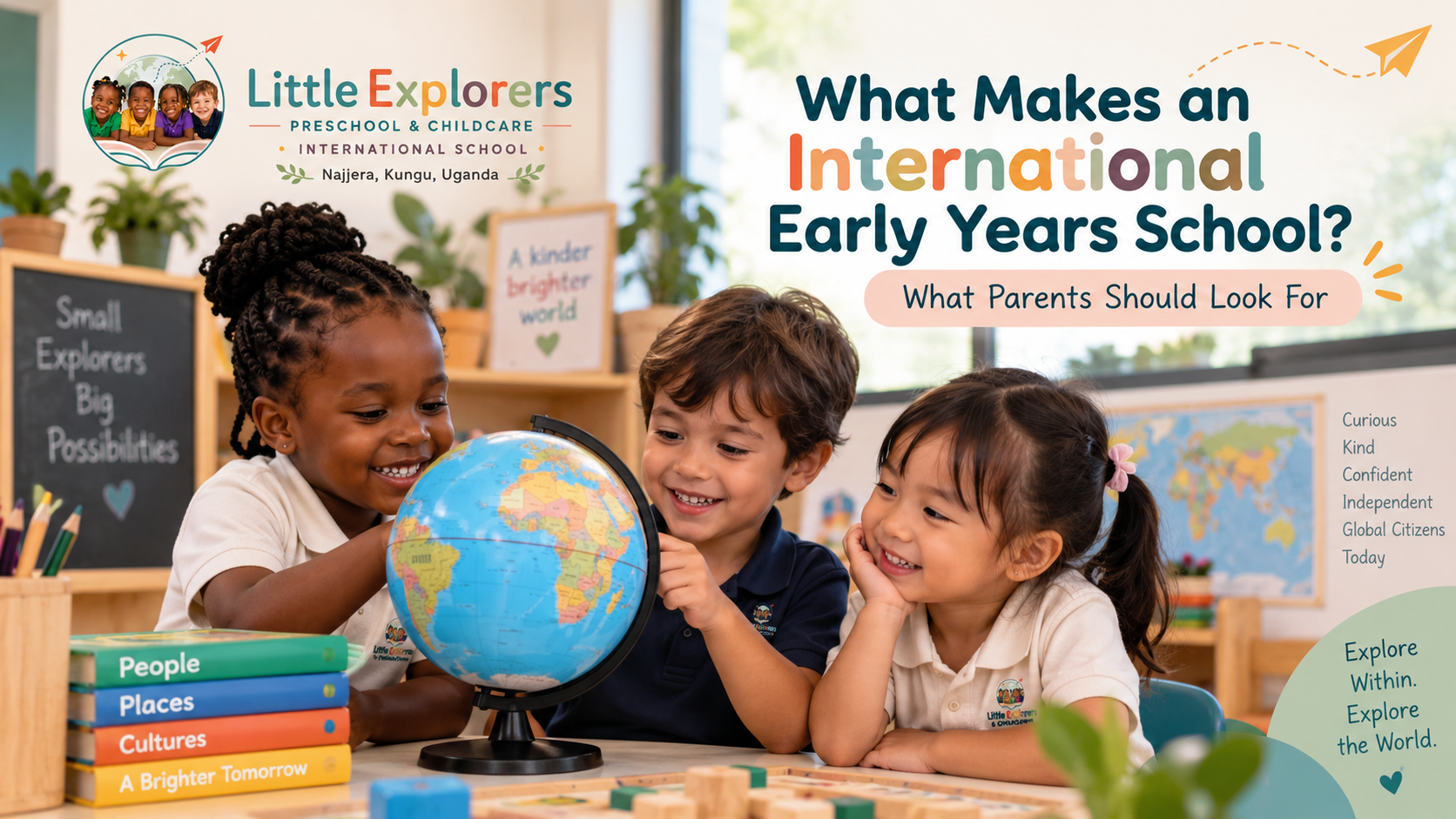
What does “international” really mean in early years education? Explore the key qualities parents should look for when choosing an international preschool or early years school in Uganda.
Choosing an international school for a young child is about much more than finding a school with the word “international” in its name.
For families with children in the early years, the most important question is:
What does an international education actually give my child?
A strong international early years environment should help children develop the confidence, communication skills, independence and curiosity they need to understand themselves and engage with the wider world.
At Little Explorers, we believe early education should prepare children not only for their next classroom, but for a changing and increasingly connected world.
What Is an International Early Years School?
An international early years school provides young children with an educational experience that looks beyond a narrow academic focus.
It should create an environment where children are encouraged to:
Communicate confidently
Explore different ideas
Develop independence
Think creatively
Work with others
Understand emotions
Ask questions
Solve problems
Become curious about the world
The early years are the foundation for future learning.
This means an international approach should begin with how children think, communicate, explore and develop, rather than simply introducing more academic content at a younger age.
“International” Should Mean More Than a Label
Parents comparing international schools may see similar words across many websites.
Terms such as:
International
Global
Future-ready
Montessori
Child-centred
Holistic
can all sound impressive.
But parents should look at what those ideas mean in practice.
A genuinely international early-years experience should be visible in the school's:
Educational philosophy
Learning environment
Communication
Teaching approach
Expectations for children
Opportunities for exploration
Approach to personal development
The question is not simply:
“Is this called an international school?”
A better question is:
“How does this school prepare my child to participate confidently in the wider world?”
1. International Education Begins With Confidence
Before children can confidently explore the world, they first need to understand themselves.
That includes developing:
Self-awareness
Confidence
Independence
Emotional security
Communication skills
At Little Explorers, this idea is central to our philosophy:
First, they explore within. Then, they explore the world.
Children who gradually learn to express ideas, understand emotions and make independent choices are building foundations that support future learning and leadership.
2. Communication Matters From the Earliest Years
Communication is one of the most important skills children develop during early childhood.
A strong international preschool environment should give children frequent opportunities to:
Speak
Listen
Ask questions
Share ideas
Work with other children
Explain their thinking
Communication is not developed only through formal language lessons.
It grows through everyday conversations, stories, imaginative play, group experiences, problem-solving and interactions with adults and other children.
When children are encouraged to express themselves, they gradually become more confident participants in their learning.
3. Children Should Learn How to Think, Not Only What to Remember
Young children naturally ask questions.
Why?
How?
What happens if...?
A strong early-years education protects and develops that curiosity.
Rather than teaching children only to remember answers, schools should create opportunities for them to:
Investigate
Experiment
Compare
Predict
Create
Solve problems
Make decisions
At Little Explorers, hands-on and real-world learning helps children turn ideas into action.
This supports the development of critical thinking, creativity and confidence.
4. Independence Is Part of International Education
Independence is not something children suddenly develop when they become older.
It begins with small experiences.
A young child might:
Choose an activity
Organise materials
Complete a simple task
Ask for help appropriately
Try to solve a problem
Take responsibility for belongings
These everyday experiences help children understand that they can participate actively in their own learning.
Over time, independence supports confidence, responsibility and self-leadership.
5. Emotional Intelligence Is as Important as Academic Development
Children do not learn in isolation from their emotions.
Their ability to understand feelings, communicate needs and develop relationships affects their experience of school.
Early-years education should therefore support children in learning to:
Recognise emotions
Express feelings appropriately
Understand others
Manage frustration
Develop empathy
Build relationships
Resolve simple conflicts
At Little Explorers, emotional intelligence forms an important part of our whole-child approach.
Strong academic foundations matter, but so does helping children become confident, self-aware and capable of working with others.
6. An International Environment Should Encourage Curiosity About the World
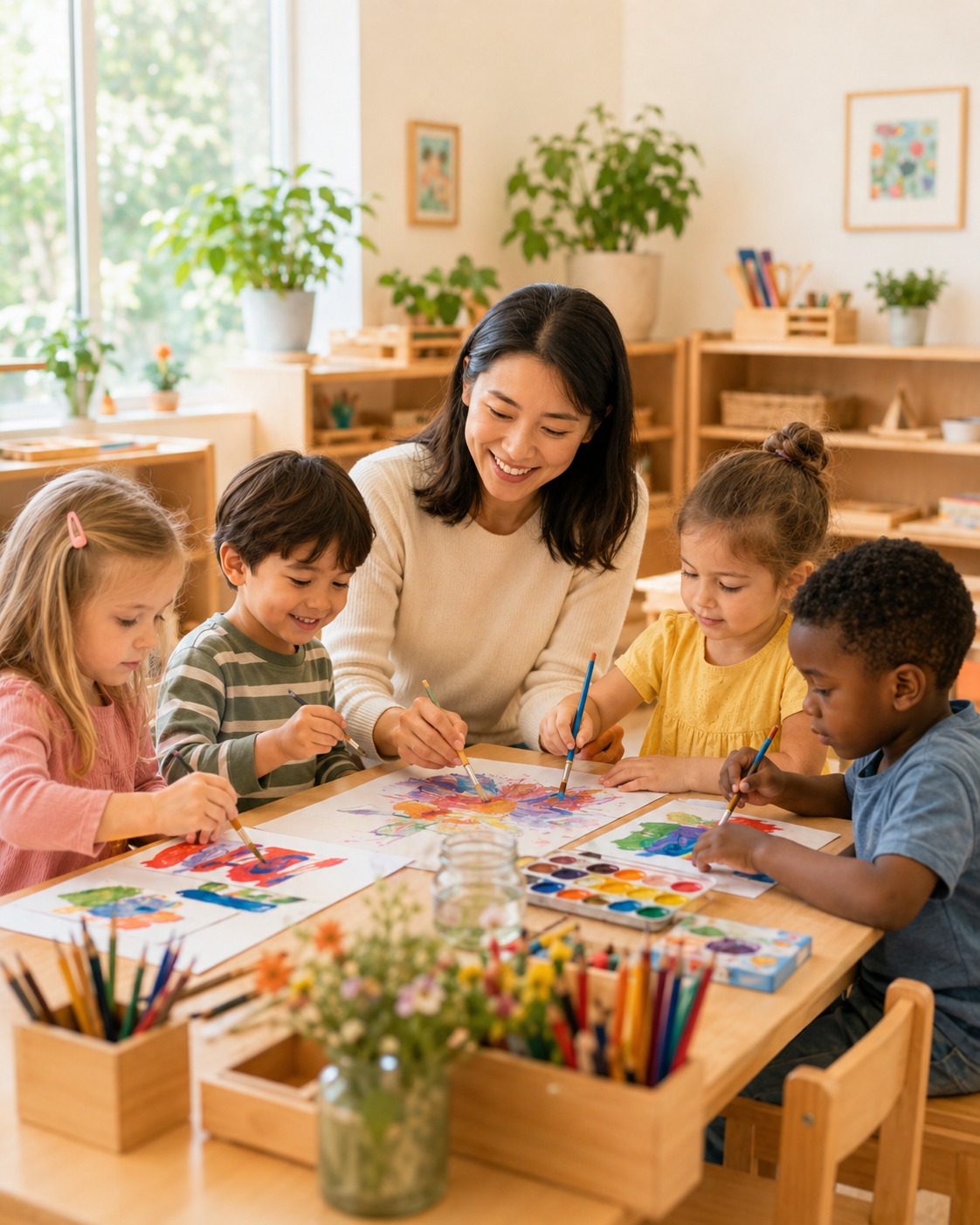
Children are naturally curious about people, places and how the world works.
An international early years environment can help nurture this curiosity through:
Stories
Art
Music
Conversation
Geography
Nature
Cultural experiences
Real-world topics
Creative projects
The goal is not for young children to memorise facts about the world.
It is to encourage an attitude of:
“I want to understand.”
That mindset can become the foundation of lifelong learning.
7. Creativity Should Have a Real Place in Learning
Creativity is not limited to painting or drawing.
Children use creativity when they:
Invent a game
Build something
Tell a story
Find a new solution
Ask an unusual question
Experiment with materials
A future-ready education should give children opportunities to imagine and create.
At Little Explorers, creativity is developed alongside academics, critical thinking, communication and problem-solving.
The objective is to help children become more than consumers of information.
We want them to become creators and thinkers.
8. Learning Should Connect to Real Life
Young children often understand ideas more deeply when they can connect them to something they can experience.
Hands-on learning may involve:
Building
Sorting
Measuring
Creating
Role-play
Exploring nature
Working together
Solving practical problems
These experiences allow children to apply what they are learning.
At Little Explorers, our educational philosophy emphasises hands-on, real-world learning that turns ideas into action.
9. What About Montessori-Inspired Learning?
Many parents looking for an international preschool also consider Montessori education.
Montessori-inspired principles can support areas such as:
Independence
Purposeful activity
Hands-on learning
Choice
Responsibility
Exploration
At Little Explorers, Montessori-inspired learning forms part of a wider whole-child approach.
Children are also supported in developing:
Strong academic foundations
Emotional intelligence
Creativity
Critical thinking
Communication
Collaboration
Life skills
Leadership
The objective is to provide children with a balanced foundation for both learning and personal development.
10. How Important Is School Readiness?
School readiness is important, but it should not be understood only as knowing letters and numbers.
True readiness also includes the ability to:
Communicate
Follow routines
Work independently
Participate in groups
Solve simple problems
Handle emotions
Ask for help
Approach new experiences confidently
Academic preparation is part of the picture.
But children also need the confidence and personal skills to use what they know.
What Should Parents Ask When Visiting an International Preschool?
A school tour can tell parents far more than a brochure.
When visiting an international preschool, consider asking:
How do children spend a typical day?
Look at the balance between structured learning, exploration, creativity, movement and play.
How does the school develop independence?
Ask for real examples of how children are encouraged to make choices and take responsibility.
How is emotional intelligence supported?
Consider how teachers help children understand feelings, relationships and communication.
What does “international” mean to this school?
A good school should be able to explain its educational philosophy clearly.
How are parents involved?
Strong communication between school and home can make a significant difference to a child's experience.
How does the school prepare children for their next stage?
Look beyond academic targets and ask about confidence, communication, independence and school readiness.
What Makes Little Explorers Different?
Little Explorers is built around the belief that early education should develop the whole child.
Our approach brings together strong academics with:
Emotional intelligence
Independence
Self-leadership
Life skills
Creativity
Critical thinking
Communication
Collaboration
Technology
Entrepreneurship
Through hands-on and real-world learning, children are encouraged to develop self-awareness, recognise their strengths, solve problems and become increasingly confident in turning ideas into action.
Our vision is to develop children who are:
Confident.
Emotionally intelligent.
Independent.
Innovative.
Future-ready.
From Exploring Within to Exploring the World
The strongest foundation for international education begins with the child.
When children understand themselves, develop confidence and learn how to communicate, they are better prepared to understand the world around them.
That is why our philosophy begins with:
Explore Within.
And grows toward:
Explore the World.
The aim is not simply to produce children who are ready for the next school year.
It is to nurture children who are ready to learn, communicate, create and lead.
Little Explorers Today. Leaders of Tomorrow.
Ready to Discover Little Explorers?
If you are looking for an international preschool in Uganda that combines academic foundations with emotional intelligence, independence, creativity and real-world learning, we invite you to experience Little Explorers for yourself.
Explore our programmes or Book a Private Tour to visit the school, see the learning environment and speak with our team.
Frequently Asked Questions
What is an international preschool?
An international preschool provides early-years education with a broader international outlook. The exact approach varies between schools, so parents should look closely at the school's educational philosophy, learning methods and child-development priorities.
What should I look for in an international school for a young child?
Parents should consider the quality of the learning environment, communication, safety, educational philosophy, opportunities for independence, emotional development and how children are prepared for the next stage of learning.
Does international education only mean academics?
No. Early international education can also include communication, independence, creativity, emotional intelligence, problem-solving and curiosity about the wider world.
Is Montessori part of international preschool education?
Some international preschools use Montessori or Montessori-inspired principles. Parents should understand how the school applies these ideas and how they fit within its wider educational philosophy.
Why should I visit a preschool before enrolling?
A school tour allows parents to see how children learn, observe the environment, understand the school's philosophy and discuss whether the programme is a good fit for their child.
Little Explorers Team
Sharing insights on early learning, parenting and Ready at 6.