

Preschool & Childcare Costs in Uganda: What Parents Should Compare
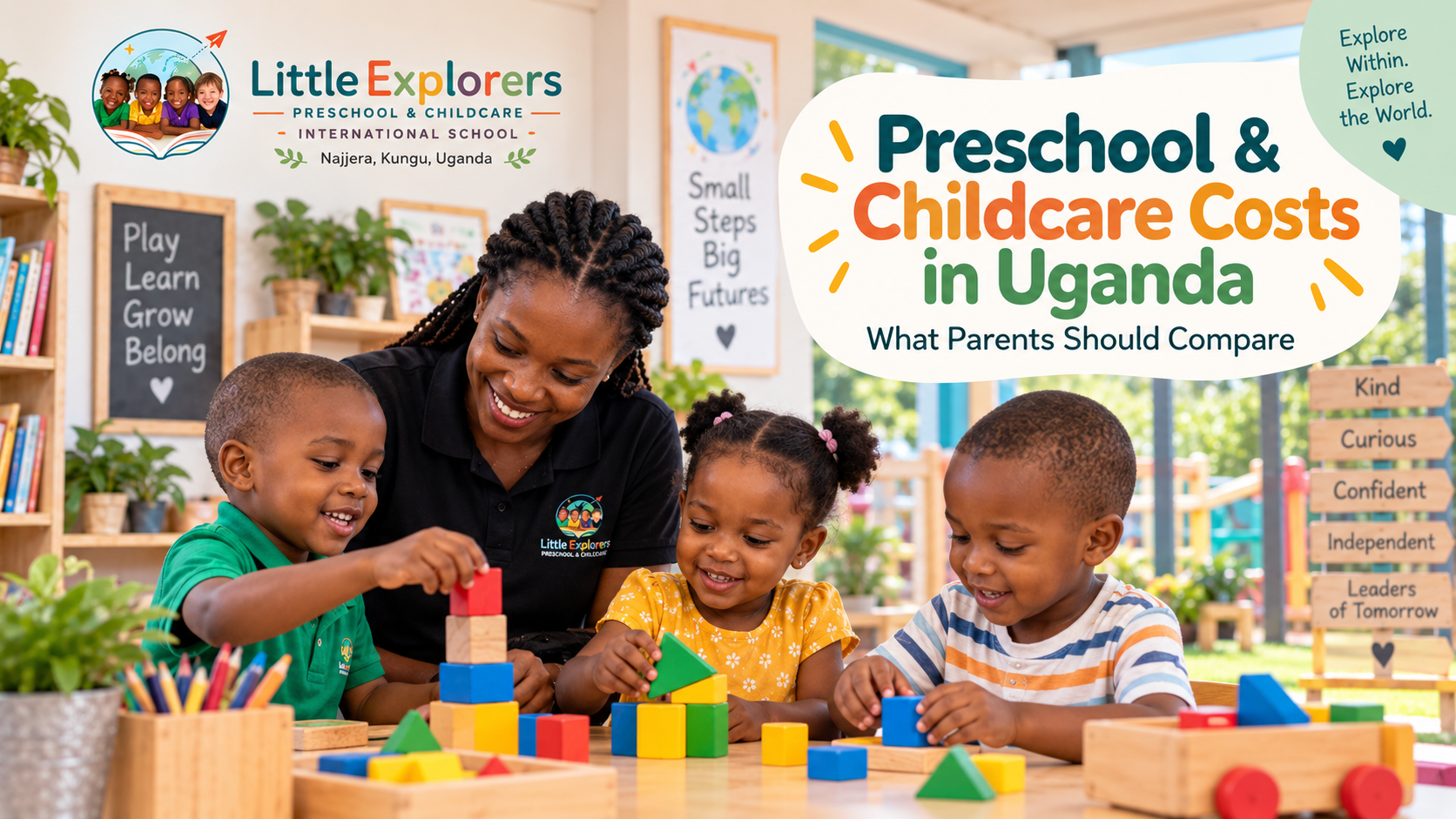
Comparing preschool fees? Discover what parents should consider beyond tuition, from childcare hours and meals to learning quality and additional costs.
Choosing a preschool or childcare centre is an important decision for every family. Cost naturally matters, but comparing schools based only on the advertised fee can make it difficult to understand what you are actually paying for.
Preschool fees and childcare costs in Uganda can vary depending on the child’s age, hours of care, learning programme, facilities, meals, staffing, and additional services.
For parents looking for preschool or childcare around Kampala, Najjera, Kungu and surrounding communities, the better question is not simply, “Which school is cheaper?” It is:
“What does the fee include, and does the programme provide the right environment for my child?”
This guide explains what parents should compare before making a decision.
Why Preschool and Childcare Costs Can Vary
Two early years centres can have very different fees even when they serve children of similar ages.
That is because the total cost may reflect much more than classroom time. It can include the length of the school day, teacher support, learning materials, meals, activities, facilities, security, holiday care and other services.
Uganda’s Early Childhood Care and Education framework also covers children below six years of age, while formal pre-primary learning is expected to follow an approved curriculum and focus on foundational competencies including socio-emotional, pre-literacy and pre-numeracy development.
For parents, this means that value matters just as much as the headline fee.
1. Start With What the Preschool Fee Includes
When comparing preschool fees, ask each school for a clear explanation of what is included.
A tuition figure may cover the main learning programme but exclude other expenses. Another school may initially appear more expensive while including services that would cost extra elsewhere.
Parents should ask about:
Tuition and registration fees
Learning materials
Meals and snacks
Uniforms
Trips and special activities
Extended childcare hours
Saturday or holiday care
Transport, where available
Deposits or one-time admission charges
Getting the full picture makes it much easier to compare the real annual or termly cost rather than just one advertised number.
2. Compare the Hours of Care
The length of the day can make a significant difference to childcare costs.
A programme ending around lunchtime is not directly comparable with a centre providing care into the afternoon or evening.
This is particularly important for working parents.
Before comparing prices, ask:
What time can my child arrive?
What time does the normal programme finish?
Is extended care available?
What happens during school holidays?
Are additional hours charged separately?
A programme that fits your family's actual schedule may provide better value even if its initial tuition fee is higher.
3. Consider Your Child’s Age and Stage
The right type of care changes as children grow.
A younger child may need more assistance with feeding, rest, routines and emotional reassurance. Older preschool children may spend more of their day developing communication, independence, early literacy, numeracy, creativity and social skills.
Uganda's current ECCE standards state that children below six are eligible for admission to ECCE centres and prohibit examinations as a condition of admission.
So when comparing daycare costs or preschool programmes, don't compare price without considering what your child actually needs at their developmental stage.
4. Look Beyond the Classroom
A beautiful classroom can make a strong first impression, but parents should look at the entire environment.
During a school visit, pay attention to the learning spaces, outdoor areas, cleanliness, security, supervision and how children interact with adults.
Ask yourself:
Do the children appear comfortable and engaged?
Are learning materials accessible to them?
Is there room for movement and exploration?
Are the spaces appropriate for the ages using them?
How does the school manage safety and safeguarding?
Uganda's Ministry of Education and Sports maintains standards and oversight for pre-primary education, including quality monitoring and minimum standards for pre-primary institutions.
The environment your child experiences every day should therefore be part of your value comparison.
5. Ask About Teachers and Individual Attention
One of the most valuable parts of early childhood education cannot be measured by the size of a playground or the appearance of a classroom: the relationship between children and educators.
Ask schools how teachers interact with children, how progress is observed, and how individual needs are supported.
For younger children especially, consistent and responsive adult attention can make a major difference to how secure and confident they feel.
When comparing preschool fees in Kampala and surrounding areas, consider the quality of interaction your child will receive—not simply the number of activities listed in a brochure.
6. Understand the Learning Approach
Preschool should be more than childcare, but it should not simply reproduce primary school for younger children either.
A strong early years programme gives children opportunities to learn through purposeful experiences, play, conversation, exploration and practical activities.
Uganda's ECCE standards identify foundational development including socio-emotional skills, pre-literacy and pre-numeracy competencies as important preparation for later learning.
When visiting a preschool, ask:
What does a normal day look like?
How much time do children spend playing and exploring?
How are communication and language developed?
How does the programme build independence?
How are children prepared for their next stage of education?
These questions tell you far more about educational value than a fee sheet alone.
7. Check Whether Meals Are Included
Food can be an overlooked part of the total daycare cost.
Some centres include meals or snacks in their fees. Others require parents to provide food or pay separately.
Neither arrangement is automatically better, but parents should know what they are comparing.
If meals are provided, ask what is normally served, how dietary requirements are handled and whether younger children receive appropriate support during mealtimes.
8. Consider Holiday and Weekend Childcare
School calendars do not always match parents' work calendars.
For families who need care beyond normal school days, access to holiday or weekend childcare can be an important consideration.
Ask whether the centre provides:
Holiday programmes
Saturday care
Extended-day options
Flexible attendance packages
Then find out whether those services are included in tuition or charged separately.
This can significantly change the real childcare cost across the year.
9. Ask About Parent Communication
Parents should know what is happening in their child's day.
When comparing schools, find out how educators communicate with families.
Does the school provide regular progress updates? Can parents discuss concerns with teachers? How are important announcements communicated?
Good communication helps parents and educators work together rather than treating preschool as simply a drop-off and collection service.
10. Calculate the Real Cost, Not Just Tuition
Before making your final comparison, estimate the total amount your family is likely to spend.
A simple comparison could look like this:
Cost to Compare | Preschool A | Preschool B |
|---|---|---|
Tuition | ✓ | ✓ |
Registration | Check | Check |
Meals | Check | Check |
Learning materials | Check | Check |
Extended care | Check | Check |
Holiday care | Check | Check |
Activities | Check | Check |
Transport | Check | Check |
This prevents a lower advertised tuition fee from appearing cheaper when several essential services are charged separately.
Price vs Value: What Matters Most?
The cheapest preschool is not automatically the best value, and the most expensive preschool is not automatically the best school.
A better comparison considers several things together:
Quality of care + learning environment + teachers + hours + services + your child’s needs + total cost.
For example, one family may value longer childcare hours because both parents work full-time. Another may prioritise a particular learning approach, smaller groups or a convenient location.
The right choice depends on what works for your child and your family.
Questions to Ask Before Paying Preschool Fees
Before enrolling, ask the school for clear answers about fees, schedules and services.
Useful questions include:
What exactly is included in the tuition fee?
Are there registration or admission charges?
Are meals and learning materials included?
What are the normal drop-off and collection times?
Is extended childcare available?
Is holiday or weekend care available?
Are there additional charges during the year?
How does the learning programme support my child's age?
How does the school communicate with parents?
Can I visit the school before making a decision?
A school should be able to explain these clearly.
Preschool and Childcare at Little Explorers
At Little Explorers in Najjera, Kungu, we believe parents should be able to understand both the learning experience their child will receive and the options available to their family.
Our early years environment is designed to support children's confidence, independence, curiosity and development through meaningful everyday learning experiences.
Families can explore our different tuition and childcare options, including available care packages, before deciding which arrangement best fits their child and schedule.
Explore our Preschool Tuition & Childcare Packages → /tuition-packages
Parents who would like to experience the environment firsthand can also arrange a visit before making an enrolment decision.
Frequently Asked Questions
How much does preschool cost in Uganda?
Preschool fees in Uganda vary between providers. The total depends on factors such as the child's age, programme, hours of attendance, facilities and which services are included. Parents should request a complete fee breakdown from each school rather than comparing tuition alone.
What should preschool fees include?
This varies by school. Tuition may cover the learning programme while meals, materials, activities, extended care or transport may be separate. Ask for a written breakdown before enrolling.
Is daycare cheaper than preschool?
Not necessarily. Daycare cost depends heavily on the child's age, number of hours and level of care required. A full-day childcare programme can cost more than a shorter preschool programme, so the services and schedules need to be compared directly.
What should I compare when looking at preschool fees in Kampala?
Compare the total cost alongside teaching quality, hours, learning approach, facilities, meals, additional care options, location and parent communication. Families around Kampala should also consider daily travel time when comparing schools in different neighbourhoods.
Should I visit a preschool before enrolling?
Whenever possible, yes. A visit gives you an opportunity to see the learning environment, meet educators, understand daily routines and ask detailed questions about fees and childcare options.

Little Explorers Team
Sharing insights on early learning, parenting and Ready at 6.