

Nursery School Near Me: What Parents Should Check Before Visiting
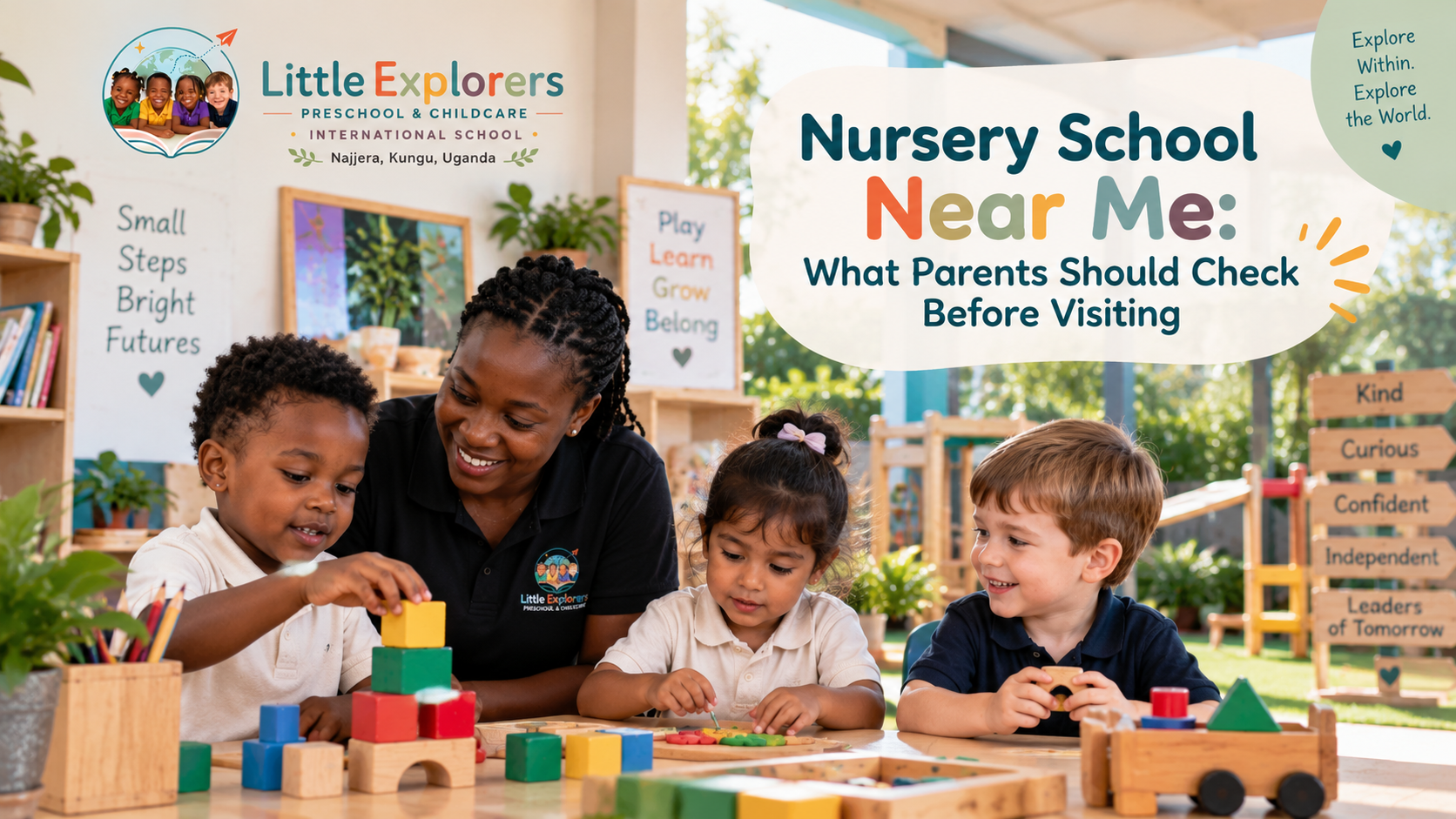
Searching for a nursery school near you is only the first step. Here are the key things parents should check before visiting and choosing an early years school for their child.
Searching for a nursery school near me is often one of the first steps parents take when looking for the right early-years environment for their child.
Location matters.
A school that is close to home or work can make daily routines easier, reduce travel time and help children settle into a more predictable routine.
But proximity should not be the only factor.
Two schools can be equally convenient while offering very different environments, educational philosophies and experiences for children.
Before choosing a nursery, preschool or kindergarten, parents should look beyond the map pin and ask a more important question:
“Is this the right place for my child to learn, grow and feel confident?”
At Little Explorers, we believe a school visit should help parents understand not only what children learn, but how they learn and who they are becoming.
1. Start With Location — But Look Beyond Distance
When parents search for a nursery school near me, Google naturally prioritises schools based partly on location.
Convenience is important.
Parents may want to consider:
Distance from home
Distance from work
Typical morning traffic
Pick-up and drop-off arrangements
School opening hours
Extended-care options
Weekend or holiday support
Ease of communication with the school
A convenient location can make family life easier.
However, a school should not be chosen only because it is the nearest option.
The right environment should also support your child's emotional, social, physical and academic development.
2. Visit the School in Person
Websites and photographs can help parents create a shortlist.
But visiting a school gives you information that is difficult to understand online.
During a school tour, pay attention to:
How children interact with teachers
Whether children appear comfortable
How teachers communicate with children
The organisation of classrooms
Learning materials
Outdoor areas
Cleanliness
Safety procedures
The overall atmosphere
Ask yourself:
Does this environment feel calm, welcoming and purposeful?
Young children learn best when they feel secure enough to explore.
3. Ask How Children Actually Learn
One of the most important questions to ask during a visit is:
“What does learning look like here?”
A strong early-years programme should involve more than children sitting and listening.
Young children learn through:
Exploration
Play
Conversation
Movement
Experimentation
Creative activities
Problem-solving
Hands-on experiences
Look for an environment where children are actively involved.
At Little Explorers, learning is designed to help children turn ideas into action through hands-on, real-world experiences.
The aim is not only to give children information.
It is to help them become curious, confident learners.
4. Look at How Teachers Interact With Children
The quality of adult-child interaction is one of the most important parts of an early-years environment.
During your visit, notice whether teachers:
Speak respectfully to children
Listen to children's ideas
Encourage questions
Support independence
Help children solve problems
Respond calmly to emotions
Give children opportunities to make choices
A good teacher does more than deliver activities.
Teachers help children feel secure, understood and capable.
The way adults communicate with children can influence confidence, behaviour and attitudes toward learning.
5. Ask About Safety and Child Protection
When comparing preschools near you, safety should be a major consideration.
Parents should feel comfortable asking questions about:
Entry and exit procedures
Visitor access
Child collection
Staff supervision
Emergency procedures
First aid
Classroom safety
Outdoor safety
Child protection policies
A professional school should be able to explain its procedures clearly.
Parents should never feel uncomfortable asking how their child will be protected.
6. Understand the School's Educational Philosophy
Two nursery schools may teach similar academic skills but have very different philosophies.
Ask:
“What kind of child are you trying to develop?”
Some schools may focus heavily on academic preparation.
Others may emphasise play.
Others may focus on independence.
At Little Explorers, our approach is based on developing the whole child.
That means supporting:
Mind — thinking and academic foundations
Heart — emotional intelligence and relationships
Character — confidence and responsibility
Creativity — imagination and innovation
Potential — individual strengths and future readiness
Our goal is to help children develop strong foundations for both learning and life.
7. Look for Independence in Everyday Learning
Independence is an important part of early childhood development.
During your visit, observe whether children are encouraged to:
Make simple choices
Organise materials
Complete age-appropriate tasks
Try solving problems
Take responsibility for belongings
Participate in routines
These small experiences can gradually build confidence.
At Little Explorers, independence is part of preparing children to become capable, self-aware learners.
8. Ask How the School Supports Emotional Intelligence
Children bring emotions into every part of their school day.
A strong early-years environment should help children understand and manage those emotions.
Ask how the school supports children in learning to:
Recognise feelings
Communicate emotions
Develop empathy
Manage frustration
Build relationships
Resolve disagreements
Develop confidence
At Little Explorers, emotional intelligence is not treated as a separate subject.
It is part of how children learn, communicate and grow.
9. Check Whether Learning Is Age-Appropriate
A nursery school should not simply copy the structure of primary school.
Young children need opportunities to move, explore, create and interact.
When visiting, ask how the school balances:
Structured activities
Free exploration
Play
Creative work
Physical movement
Group experiences
Independent activities
Early learning should challenge children without placing unrealistic expectations on them.
10. Ask About School Readiness
Parents often want to know whether a nursery or preschool will prepare their child for the next stage of education.
School readiness includes academics, but it is much broader.
A child may also need to develop:
Confidence
Communication
Independence
Emotional regulation
Ability to follow routines
Collaboration
Problem-solving
Curiosity
Responsibility
A strong early-years programme supports these skills gradually.
The objective should not simply be:
“Can the child complete schoolwork?”
It should also be:
“Is the child confident and ready to learn?”
11. Consider the Learning Environment
The physical environment can tell parents a lot about a school's approach.
Look for spaces that encourage:
Exploration
Creativity
Independent activity
Reading
Practical learning
Collaboration
Movement
Learning materials should be accessible and appropriate for young children.
The environment should feel designed for children, rather than simply decorated for adults.
12. Ask About Montessori-Inspired Learning
Parents searching for the best preschools near me may also encounter schools offering Montessori or Montessori-inspired learning.
Montessori-inspired approaches can encourage:
Independence
Choice
Hands-on learning
Practical activities
Responsibility
Concentration
At Little Explorers, Montessori-inspired principles form part of a broader educational philosophy that also supports:
Emotional intelligence
Creativity
Communication
Critical thinking
Leadership
Collaboration
Academic foundations
Parents should ask schools to explain how their learning philosophy works in practice rather than relying only on labels.
13. Understand Parent Communication
Good communication between parents and school helps create consistency for children.
Ask:
How are parents updated?
Who should parents contact with questions?
How is progress communicated?
How does the school handle concerns?
Are parents informed about important changes?
Parents should feel that communication is clear and accessible.
14. Ask About Flexible Care
For working parents, the school day does not always match the working day.
When comparing local childcare options, ask whether the school offers:
Extended hours
Afternoon care
Weekend programmes
Holiday programmes
Flexible packages
Little Explorers offers flexible care options designed to support families beyond the standard school programme.
This can be particularly valuable for parents balancing work and family responsibilities.
15. Look at the Children, Not Only the Building
Beautiful classrooms are appealing.
But one of the most useful things parents can observe during a visit is the children themselves.
Do they appear:
Comfortable?
Engaged?
Curious?
Confident?
Supported?
Able to communicate with adults?
The experience children are having matters more than decoration alone.
Questions to Ask During a Nursery School Tour
Before visiting a nursery school near you, it can help to prepare a few questions.
Consider asking:
What ages do you accept?
Make sure the programme matches your child's age and developmental stage.
What is your educational philosophy?
Ask the school to explain its approach in simple terms.
What does a typical day look like?
This will help you understand the balance between learning, play, movement and rest.
How do you support children who are settling in?
Starting nursery can be a major transition for some children.
How do you communicate with parents?
Understand how updates, progress and concerns are shared.
How do you support independence?
Ask for practical examples.
What safety procedures do you follow?
The school should be able to explain these clearly.
What flexible-care options are available?
This is particularly important for working families.
Can I see the learning spaces?
A tour should help parents understand how the environment supports children's development.
What Makes Little Explorers Different?
At Little Explorers, our educational philosophy goes beyond academics.
We aim to develop children who are:
Confident
Emotionally intelligent
Independent
Creative
Curious
Future-ready
Our approach blends strong academic foundations with:
Emotional intelligence
Self-leadership
Life skills
Creativity
Critical thinking
Communication
Collaboration
Technology
Entrepreneurship
Hands-on learning
Children are encouraged to explore their own abilities while gradually developing the confidence to understand and engage with the wider world.
Our philosophy is simple:
First, they explore within. Then, they explore the world.
Finding the Right Nursery School Near You
Google Maps can help you discover schools close to your location.
But choosing the right school requires more than checking distance and reviews.
Parents should consider:
Location + Safety + Teachers + Philosophy + Environment + Communication + Child Development
The best school for your child is one where they can feel secure enough to explore, supported enough to grow and confident enough to become increasingly independent.
Visit Little Explorers
If you are looking for a nursery, preschool or early-years programme in the Najjera / Kungu area of Uganda, we invite you to visit Little Explorers.
A private tour gives you the opportunity to:
Explore the learning environment
Understand our educational philosophy
Learn about our programmes
Ask questions
Discuss your child's needs
Meet the team
Book a Private Tour and experience Little Explorers for yourself.
Little Explorers Today. Leaders of Tomorrow.
Frequently Asked Questions
How do I find a good nursery school near me?
Start with location-based search and Google Maps, then compare schools based on safety, educational philosophy, teacher-child interaction, learning environment, communication and programmes. Visiting shortlisted schools is one of the best ways to understand the differences.
What should I look for when visiting a nursery school?
Look at how teachers interact with children, whether the environment feels safe and welcoming, how children learn, classroom organisation, opportunities for independence and how clearly the school explains its philosophy.
Is the nearest nursery always the best choice?
Not necessarily. Convenience matters, but parents should also consider quality, safety, learning approach, communication and whether the school fits their child's developmental needs.
Should I visit a preschool before enrolling?
Yes. A school tour allows you to see the environment, ask questions and understand how the school approaches learning, safety and child development.
What should I ask about childcare safety?
Ask about visitor access, child collection, staff supervision, emergency procedures, first aid, child protection and how the school manages safety throughout the day.
Where is Little Explorers located?
Little Explorers is located in the Najjera / Kungu area, Uganda. Parents interested in the school can book a private tour to visit the campus and learn more about the programmes.

Little Explorers Team
Sharing insights on early learning, parenting and Ready at 6.